
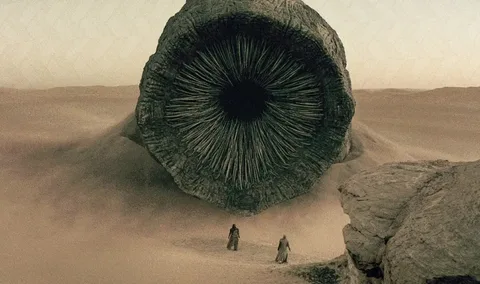
When Denis Villeneuve set out to bring Frank Herbert’s epic saga back to the screen, he faced an almost impossible task – finding a place on Earth that could convincingly double for an alien desert planet. Arrakis, the harsh and beautiful world where spice flows and sandworms rule, demanded landscapes so vast and otherworldly that audiences would forget they were looking at our own planet. Jordan, with its rust-colored valleys and endless sand seas, answered that call perfectly.
The visual impact of Dune: Part Two owes much to the Hashemite Kingdom’s terrain. Those sweeping shots of Paul Atreides walking across amber dunes, the Fremen hideouts carved into ancient rock, the golden light that seems to drip from the sky during dawn sequences – all of this found its canvas in Jordan’s southern deserts. The scale is genuinely staggering. Standing in these locations today, visitors often report a disorienting sensation, as if they’ve stepped into the film itself or perhaps onto another world entirely.
In Jordan, the production crew captured key scenes involving the Fremen community, desert crossings, and several pivotal moments that unfold across the hostile sands of Arrakis. Without revealing too much for those who haven’t seen the film yet – the Jordanian sequences form the emotional and visual backbone of the movie’s first half. The country’s varied desert topography allowed filmmakers to create different “zones” of Arrakis without ever leaving the region.
Top Scenic Desert Locations Where Dune Was Filmed
Jordan offers a remarkable concentration of filming locations within a relatively compact area. Here are the most significant spots that brought Arrakis to life on screen.
1. Wadi Rum – The Heart of Arrakis
No single location embodies the spirit of Dune more completely than Wadi Rum. This protected desert wilderness in southern Jordan served as the primary filming ground for both Dune films. The valley’s distinctive sandstone mountains rise dramatically from pink and red sand floors, creating vistas that look genuinely extraterrestrial. Jebel Khazali, with its narrow siq and ancient inscriptions, and the broader expanses near Um Sabatah provided backdrops for numerous Fremen camp scenes.
What makes Wadi Rum so cinematically valuable is the sheer variety within its 720 square kilometers. Within a single day’s drive, crews could capture towering rock formations, flat sandy plains, narrow canyons and dunes of varying heights and colors. The Bedouin camps scattered throughout the protected area also offered authentic settings that required minimal set dressing.
2. Wadi Rum Village and Rum Village Area
The small settlement at the entrance to the protected area might seem ordinary at first glance. But this zone, where the paved road ends and the desert truly begins served as a logistical hub for the production. Several wide-angle establishing shots were captured here, using the transition between civilization and wilderness to mirror Arrakis’s own geography.
3. The Seven Pillars of Wisdom
Named after T.E. Lawrence’s famous book, this massive rock formation near the Wadi Rum visitor center features prominently in several panoramic shots. Its distinctive shape – seven worn pillars merged into one towering massif – creates an immediately recognizable silhouette. In Dune: Part Two, clever camera angles transformed these pillars into distant Fremen landmarks.
4. Khazali Canyon
This narrow fissure cutting through a sandstone mountain offered something the production desperately needed: shade and enclosure. The canyon’s walls, covered with Thamudic and Nabataean inscriptions dating back thousands of years, provided ready-made “Fremen writing” for background authenticity. Scenes depicting hidden passages and sheltered meeting spots were filmed here.
5. Um Fruth Rock Bridge
Natural stone bridges are scattered throughout Wadi Rum, but Um Fruth stands out for its accessibility and photogenic proportions. This 15-meter high arch became a visual motif in several sequences, its impossible-looking span suggesting the alien geology of Arrakis. Visitors can climb the bridge today and stand exactly where key shots were framed.
6. The Red Dunes of Wadi Rum
Near the eastern edge of the protected area, enormous sand dunes glow with an intense red-orange color that intensifies during golden hour. These dunes, some reaching 60 meters in height, provided the classic “desert planet” imagery that defines the franchise. The color comes from iron oxide in the sand – essentially rust – which gives the landscape its Martian appearance.
7. Jebel Um Ishrin
This 1,754-meter peak, one of the highest in Wadi Rum, appears in several wide establishing shots. The mountain’s layered sedimentary rock tells a geological story spanning hundreds of millions of years. For the filmmakers, it represented the ancient and indifferent nature of Arrakis itself – a world that existed long before humans and would endure long after.
8. Barrah Canyon
Less visited than other Wadi Rum attractions, Barrah Canyon offered the production team something valuable: pristine sand without footprints or tire tracks. The canyon’s isolation made it ideal for scenes requiring untouched desert landscapes. Its high walls also created natural sound barriers, reducing wind noise during dialogue sequences.
🎬 Film Location Note
Jordan has hosted numerous Hollywood productions beyond Dune, including The Martian, Lawrence of Arabia, and Rogue One: A Star Wars Story. The country’s film commission actively supports productions, making permits and logistics surprisingly straightforward for visitors hoping to explore these cinematic landscapes.
3-Day Itinerary Through Jordan’s Dune Filming Locations
Covering the major filming locations requires careful planning. Here’s a practical route that maximizes time at each site while accounting for Jordan’s distances and terrain.
Day 1: Arrival and Wadi Rum Introduction
Fly into Queen Alia International Airport near Amman. The drive south to Wadi Rum covers approximately 290 kilometers and takes around 3.5 to 4 hours via the Desert Highway. Alternatively, some travelers prefer stopping in Petra en route though this adds complexity to the schedule.
Arrive at Wadi Rum Village by late afternoon. Check into a Bedouin camp within the protected area – this is essential for experiencing the desert properly. Spend the evening watching sunset paint the rocks in impossible colors. The transition from day to night happens quickly here ,and the temperature drop can be dramatic.
Day 2: Full Desert Exploration
Wake before dawn for sunrise photography at the red dunes. Spend the full day exploring filming locations with a local guide and 4×4 vehicle. A typical route covers:
- Seven Pillars of Wisdom viewpoint (early morning)
- Khazali Canyon for inscriptions and shade (mid-morning)
- Lawrence’s Spring and nearby formations (late morning)
- Um Fruth Rock Bridge (midday – climb if conditions allow)
- Barrah Canyon for remote landscapes (afternoon)
- Red dunes again for sunset (evening)
Total driving distance within the protected area: approximately 60-80 kilometers. Return to camp for dinner and stargazing. The night sky in Wadi Rum, far from any significant light pollution, reveals the Milky Way with stunning clarity.
Day 3: Secondary Locations and Departure
Spend the morning exploring any missed locations or revisiting favorites in better light. Depart Wadi Rum by midday. Options include:
- Drive to Aqaba (70 km, 1 hour) for flights or beach time
- Head to Petra (110 km, 1.5 hours) to extend the trip
- Return directly to Amman (290 km, 4 hours)
For those with additional days, Petra absolutely deserves inclusion. While not a Dune filming location specifically, its carved facades and canyon approaches share the same geological drama that made southern Jordan so appealing to filmmakers.
How to Get Around: Car, Tours, or Public Transport
Jordan presents travelers with a clear choice regarding transportation, and the decision significantly impacts what locations remain accessible.
Rental Car: Offers maximum flexibility for photography-focused trips. Catching golden hour at remote locations requires being there before dawn or staying past sunset – schedules that group tours cannot accommodate. The main highways are well-maintained and clearly signed in English. Within Wadi Rum itself however, a 4×4 with local driver is mandatory; the protected area doesn’t permit self-driving on its sandy tracks.
Organized Tours: Convenient for travelers with limited time or those uncomfortable driving in unfamiliar territory. Many Amman-based operators offer 2-3 day packages covering Wadi Rum and Petra. The trade-off is reduced flexibility – tour schedules prioritize efficiency over optimal lighting conditions.
Public Transport: Technically possible but impractical for serious location scouting. JETT buses connect Amman to Aqaba with stops possible near Wadi Rum. However, last-mile connections to the protected area require pre-arranged pickups, and schedules don’t align well with desert exploration needs.
🚗 Getting the Most from Your Desert Adventure
To visit more filming locations and catch the best light during sunrise and sunset, renting a car provides the greatest freedom. You can compare rental options and prices at carrentalscanner.com – it simplifies finding a vehicle that matches your route and budget.
Vehicle recommendations: A standard sedan handles all paved roads between Amman, Petra, and Wadi Rum comfortably. If planning any detours onto unpaved tracks outside the protected area, consider a vehicle with higher ground clearance. Note that driving within Wadi Rum’s protected zone requires a local Bedouin guide regardless of your rental vehicle.
Best Time to Visit and Desert Conditions
Jordan’s desert climate demands respect. Planning around weather patterns separates comfortable adventures from miserable ones.
Optimal seasons: March through May and September through November offer the most pleasant conditions. Daytime temperatures range from 20-30°C, cool enough for comfortable hiking yet warm enough for pleasant evenings. Spring occasionally brings brief rain showers that transform the desert briefly, while autumn tends toward stable, clear skies.
Summer reality: June through August sees temperatures exceeding 40°C regularly. Midday exploration becomes genuinely dangerous and even locals retreat to shade during peak hours. If visiting during summer, restrict outdoor activities to early morning and late evening.
Winter considerations: December through February brings surprisingly cold nights – temperatures can drop below freezing in Wadi Rum. Days remain pleasant for hiking but require layering. This season offers the clearest skies for astrophotography.
For that cinematic golden light that defines the Dune films, timing matters enormously. The “golden hour” in Wadi Rum – roughly 45 minutes after sunrise and before sunset – transforms ordinary landscapes into something magical. Shadows lengthen, colors deepen, and the rock formations seem to glow from within. Photographers and videographers should plan their entire schedule around these windows.
Night photography enthusiasts will find Jordan’s skies exceptional. The Milky Way arcs overhead with remarkable clarity, and the lack of light pollution means stars remain visible nearly to the horizon. New moon periods offer the darkest skies.
What to Bring: Essential Desert Checklist
Packing for Jordan’s deserts requires balancing sun protection, temperature variation and practical mobility. These items prove essential:
- Water: Minimum 3 liters per person per day for active exploration. More during summer months. Hydration packs work well for hiking.
- Sun protection: Wide-brimmed hat, SPF 50+ sunscreen, quality sunglasses. The UV intensity at altitude surprises many visitors.
- Clothing: Loose, light-colored long sleeves and pants. Protects from sun while allowing airflow. A warm layer for evenings – temperatures drop sharply after sunset.
- Footwear: Sturdy hiking boots or trail shoes with ankle support. Sand gets everywhere , so gaiters help during dune climbing.
- Buff or scarf: Essential for protecting face and neck during windy conditions. Sand particles travel horizontally when winds pick up.
- Power bank: Camera batteries drain quickly in temperature extremes. A 20,000mAh bank provides comfortable margin.
- Offline maps: Download Google Maps or Maps.me for the region. Cell coverage exists but becomes spotty in remote canyons.
- Basic first aid: Blister treatment, pain relievers, any personal medications. Medical facilities are distant from Wadi Rum.
Frequently Asked Questions
Do visitors need special permits to explore filming locations?
Entering Wadi Rum Protected Area requires purchasing a ticket at the visitor center (5 JOD for non-Jordanians, often included with Jordan Pass). No additional filming-specific permits exist for tourists. Commercial photography and drone flights require separate authorization from the Aqaba Special Economic Zone Authority – a process best handled well in advance through official channels.
Can the filming locations be visited independently?
Partially. The Wadi Rum visitor center and Seven Pillars viewpoint are accessible without guides. However, venturing deeper into the protected area requires a local Bedouin guide with a 4×4 vehicle – this regulation exists both for safety and to support the local community. Half-day and full-day tours can be arranged at the visitor center or booked in advance. Independent hiking is permitted on marked trails near the village entrance.
What does a typical trip cost?
Budget varies widely based on comfort level. A basic 3-day trip from Amman might include: car rental (35-60 JOD/day), fuel (approximately 40 JOD round trip), Wadi Rum entry and guided tour (40-70 JOD), overnight in Bedouin camp with meals (50-150 JOD depending on amenities). Total budget estimate: 200-400 JOD for a self-organized trip, or 300-600 JOD for organized tour packages including transport, guiding, and accommodation.
Where should visitors stay near the filming locations?
Wadi Rum offers dozens of Bedouin camps ranging from basic tent setups to luxury “glamping” experiences with private bathrooms and climate control. Staying inside the protected area is strongly recommended – it allows for sunset and sunrise access without entry/exit logistics. Popular camps include those near Um Sabatah and the central valley area. For those preferring hotels, Wadi Rum Village has basic guesthouses, while Aqaba (1 hour south) offers full resort amenities.
How difficult is it to reach Wadi Rum?
Getting there is straightforward by Middle Eastern standards. From Amman, the Desert Highway provides a direct paved route south. The drive takes 3.5-4 hours under normal conditions and passes through relatively flat, easy terrain. From Aqaba, the journey shortens to about 1 hour. Public JETT buses run daily between Amman and Aqaba with potential drop-offs near the Wadi Rum turnoff, though final connection to the visitor center requires taxi or pre-arranged transfer. Most visitors find driving themselves or booking transport through their accommodation simplest.