
Creative testing — generating multiple visual directions quickly to find what works before investing in production — has become one of the most practical applications of AI image generation for teams. But not every tool is built for the speed and variety that testing workflows demand.
For busy marketing, product, and creative teams, the right AI image generator isn’t necessarily the flashiest or the most feature-complete. It’s the one that lets you generate, evaluate, and decide fast.
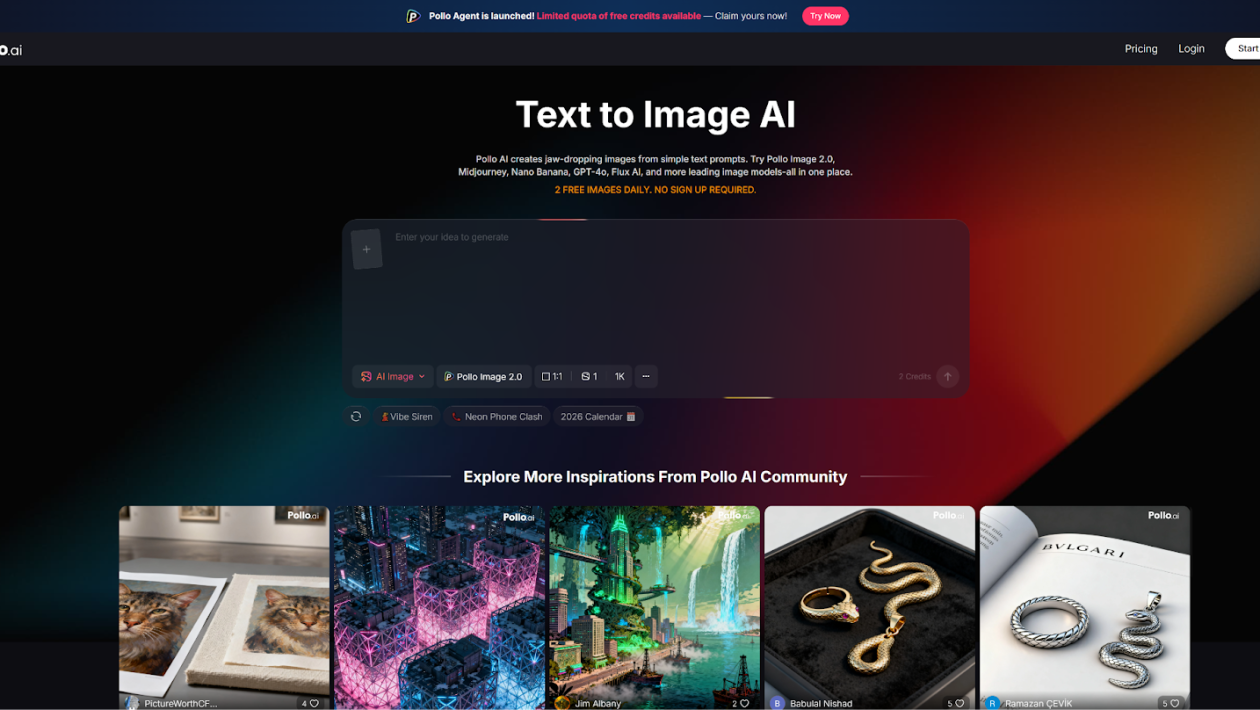
The Pollo AI image generator fits that profile: strong prompt fidelity, broad style range, and a low-friction workflow that keeps iteration tight.
Here’s how to build a lean creative testing workflow around AI image generation.
What Busy Teams Actually Need From AI Image Generation
Most teams don’t need infinite features. They need four things from an AI image generator:
Speed. If each generation cycle takes a minute or more, testing multiple creative directions in a single work session becomes impractical. For high-velocity testing, near-instant generation matters.
Variety. A tool that produces essentially the same image in response to every prompt isn’t useful for testing. You need meaningfully different outputs that represent genuinely distinct directions.
Repeatability. When a direction tests well, you need to be able to generate consistent variations — same style, same mood, same quality bar — without significant effort. Inconsistency between generations forces rework.
Usable output. A visually compelling image that can’t be exported at a usable resolution, or that takes significant editing to be deployable, adds friction to the testing loop. The standard shouldn’t be “perfect” — it should be “good enough to test.”
A Lean Workflow for Creative Testing
This five-step loop keeps AI-assisted creative testing efficient without generating unnecessary overhead:
Step 1 — Define one hypothesis. What are you actually testing? “Which color palette resonates most with our audience?” or “Does a lifestyle image or a product-focused image drive more clicks?” Write the hypothesis down. If you can’t state it in one sentence, clarify before generating.
Step 2 — Generate three to five distinct directions. Write separate prompts for meaningfully different approaches — not slight variations of the same visual. If you’re testing lifestyle vs product-focused imagery, write one prompt for each, then generate a few variations of each direction.
Step 3 — Select before refining. Resist the urge to polish everything. Pick one or two directions that show the most promise against your hypothesis. Refine only those. This prevents the “refine everything” trap that turns a quick testing session into a production exercise.
Step 4 — Test at the lowest useful quality. Your creative test doesn’t need to be production-ready. It needs to be good enough to get a real reaction — from a colleague, a focus group, or a small-scale paid test. Save the production polish for the winning direction.
Step 5 — Document what worked and why. Don’t just pick a winner. Record what made it win — the composition, the color palette, the subject focus, the emotional mood. That learning informs the next test.
Evaluation Criteria Teams Should Use
When comparing AI image generators for testing workflows, these are the dimensions that matter most:
- Prompt adherence: Does the tool consistently produce images that reflect the key elements of the prompt? Poor adherence forces extra iteration.
- Generation speed: How many cycles can you complete in a one-hour session? Ten cycles at 6 seconds each is very different from ten cycles at 60 seconds each.
- Style breadth: Can the tool produce meaningfully different aesthetics — photorealistic, illustrated, editorial, abstract — without requiring major tool-switching?
- Editing support: Does the platform let you make targeted adjustments (crop, background, upscale) without exporting to a separate tool?
- Ease of access: How much time is spent navigating the tool vs generating? Friction in the interface slows the test cycle.
Why Teams Often Compare Multiple All-Round Tools
It’s common for creative teams to benchmark several general-purpose tools before settling on a primary testing platform.
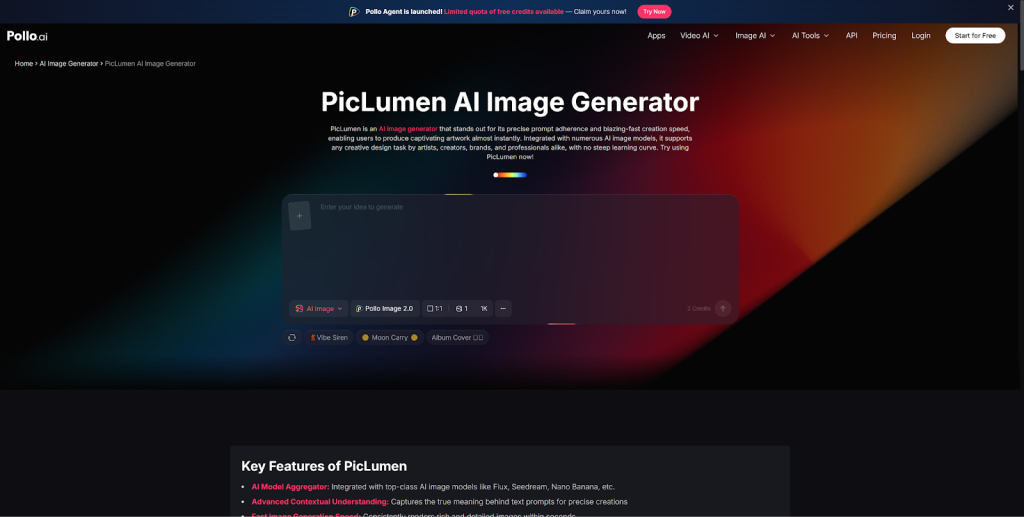
A PicLumen AI comparison is a good example of this kind of evaluation: PicLumen’s known breadth of styles — from photorealistic to anime to concept art — combined with built-in enhancement tools makes it a natural reference point when teams are evaluating which general-purpose AI generator fits their specific testing pace and output needs.
The right answer is usually the tool that handles your most common test scenarios with the least friction. Run the same test prompts through two or three tools and compare time-to-usable-output. That real-world benchmark is more useful than any feature comparison table.
Where AI Creative Testing Creates the Most Value
Not all creative decisions benefit equally from AI-assisted testing. These are the use cases where it creates the clearest ROI:
- Paid social creative concepts: Testing image directions for Facebook, Instagram, or LinkedIn ads before committing to a production shoot or a designer’s time.
- Blog hero images: Quickly generating three or four different visual treatments for a post to see which direction best supports the content.
- Internal pitches: Giving a pitch deck a strong visual foundation without needing to brief a designer for preliminary concepts.
- Product storytelling drafts: Exploring early-stage lifestyle or brand concepts for a product before visual identity work begins.
In each case, the key characteristic is the same: AI handles a task that would otherwise require either significant designer time or a lot of manual sourcing from stock libraries.
Fast Testing Is a Competitive Advantage
Teams that can generate and evaluate visual directions quickly iterate faster, make better creative decisions, and waste less production budget on directions that don’t work. AI image generation is a meaningful accelerator in that process — when the tool supports the pace of the work.
Pollo AI is built for that kind of fast, iterative testing workflow. Try it with a specific creative hypothesis, generate a focused batch of directions, and evaluate. That’s the fastest way to find out whether it fits how your team works.