
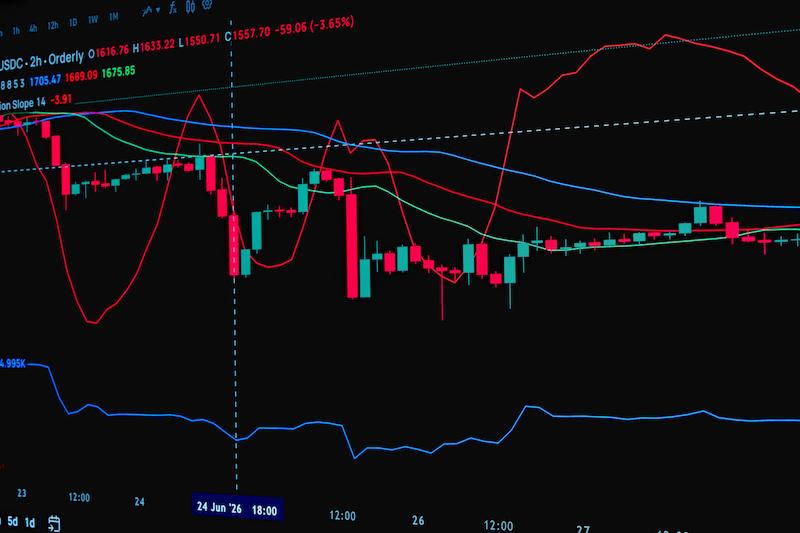
Synthetic indices can change rapidly, so it’s crucial to grasp what a price shift could actually mean before jumping into a trade. Measuring price changes in pips is a useful way to do this. However, synthetic indices don’t always stick to the same pip conventions as traditional forex pairs. So, it’s essential for traders to review the specs of the specific instrument they’re interested in dealing.
Follow these steps to correctly calculate price movement and ultimately your potential profit or loss.
Understand What a Pip Represents
A pip is the unit of measurement that indicates the smallest possible price change. With synthetic indices, the size or value of a pip will differ from one index to another and from one pricing format to another. This means that you can’t simply rely on the standard forex pip convention for every synthetic instrument. You need to know how many decimal places are quoted, what the minimum price movement is, and the contract specifications for the specific instrument on your trading platform.
Once you know this, you can start to understand how to calculate pips in synthetic indices.
Use the Price Difference
If the size of the pip is known, then the calculation is simple. For a simple long trade, subtract the Entry Price from the Exit Price:
Pips = (Exit Price – Entry Price) ÷ Pip Size
For example, you buy an index at 3,200.20, and you close it at 3,215.20. The index has moved 15.00 points. If the pip size of this instrument is 0.01, the point variation is equal to 1,500 pips.
This example shows the importance of not making assumptions about the decimal place that determines the pips of synthetic indices.
Connect Pips to Profit
Counting pips tells you how far the asset moved but not how much money you earned from your trade. That depends on the value of the pip and your position size.
A useful calculation is:
Gross Result = Pip Movement × Value per Pip
For instance, if your trade results in 500 pips and each pip of this position is worth $0.02, then your gross result will be $10 before trading costs.
If you’re looking for more educational resources on synthetic indices and their trading concepts, this article can serve as a helpful reference.
Consider the Direction of the Trade
Your calculation must also consider your entry and exit direction. A long position generally makes money when the price moves up, and a short position makes money when price goes down. Thus, a repetition of the above price action could result in a loss rather than a gain depending on your position.
When practicing how to calculate pips in synthetic indices, write down your entry, exit, direction, pip size, and position size. This simple exercise eliminates many avoidable calculation mistakes.
Use Pips for Risk Management
Pip calculations are especially relevant when determining your stop-loss and take-profit level. Understanding the distance between your entry and stop in terms of pips allows you to consider how much risk you are taking.
Consider a simple 300-pip stop; this could mean different financial exposure depending on the pip value and the size of your position. This is why how to calculate pips in synthetic indices is best considered as part of position sizing rather than as a calculation on its own.
Avoid Common Calculation Mistakes
A common mistake traders make is thinking that every synthetic index has the same pip structure. Another error is mixing up points with pips or overlooking how position size affects things. Always pay close attention to contract specifications, as terminology and pricing can differ quite a bit between instruments and platforms.
Check the relevant specifications and calculate the exposure your trade will give you before placing any order. Understanding how to calculate pips in synthetic indices gives you an even clearer idea of what each price move could translate into in terms of actual financial cost or gain.
Turn Price Movement Into Better Decisions
Pip calculation is really about making a price move easier to understand. Rather than seeing a chart rise or fall a few points and guessing what the cost might be to your account, you can take the movement and relate it to your position and risk.
When you properly understand how to calculate pips in synthetic indices, you’ll be able to consider trade distances more accurately, set clear exits, and make risk decisions based on numbers rather than assumptions.